How to Choose the Right Yarn and Crochet Hook
Yarn weights, fibers, and hook sizes explained in plain language, with a quick reference table and practical picks for common beginner projects.
- Published
- Reading time
- 8 min read
- Skill level:
- Beginner
In this article (5 sections)
Walking into a yarn aisle can feel overwhelming. The good news: you only need to understand three things to choose well: yarn weight (thickness), fiber (what it's made of), and hook size. Your yarn label tells you most of what you need.
Understanding yarn weight
Yarn weight describes thickness, not how heavy the skein is. Many labels use a standard numbered system from 0 to 7. Thicker yarns work up faster; thinner yarns give finer detail.
| Number | Category | Common names | Typical hook range |
|---|---|---|---|
| 0 | Lace | Lace, thread | Steel hooks to 2.25 mm |
| 1 | Super fine | Sock, fingering | 2.25–3.5 mm |
| 2 | Fine | Sport, baby | 3.5–4.5 mm |
| 3 | Light | DK, light worsted | 4.5–5.5 mm |
| 4 | Medium | Worsted, aran | 5.5–6.5 mm |
| 5 | Bulky | Chunky | 6.5–9 mm |
| 6 | Super bulky | Super chunky | 9–15 mm |
| 7 | Jumbo | Jumbo, roving | 15 mm and larger |
These ranges are starting points. Many crocheters use a 5 mm hook with worsted yarn, and amigurumi deliberately uses a smaller hook for tighter fabric. Always check the recommendation on your yarn label.
Choosing a fiber
- Acrylic: affordable, machine-washable, and available in every color. Great for practice, blankets, and toys.
- Cotton: crisp stitch definition and very little stretch. Ideal for dishcloths, bags, and amigurumi, but it's less forgiving on the hands.
- Wool: warm and elastic, with lovely drape for garments. Non-superwash wool can felt if washed in hot water, so check the care label.
- Blends: combine properties, such as cotton-acrylic for soft, washable baby items or wool-acrylic for affordable warmth.
As a beginner, avoid fuzzy (mohair-style), bouclé, eyelash, or very splitty yarns. Their texture hides stitches and makes mistakes hard to fix.
Choosing a crochet hook
Hooks are sized in millimeters, and US hooks also carry a letter and number. Common sizes include G-6 (4 mm), H-8 (5 mm), I-9 (5.5 mm), J-10 (6 mm), and K-10.5 (6.5 mm). Because letter sizes can vary slightly between brands, the millimeter size is the most reliable.
Hook materials
- Aluminum: smooth, durable, and inexpensive. Yarn glides easily.
- Ergonomic handles: soft grips that reduce hand strain during longer sessions.
- Wood or bamboo: warm and light, with a little grip, which helps with slippery yarns.
- Plastic: common in very large sizes for bulky yarn.
Hook head shape
Hooks come in two head styles. Inline hooks have a throat that lines up with the shaft. Tapered hooks have a rounded throat that narrows gently. Neither is better. Try both if you can, because many people find one feels much more natural.
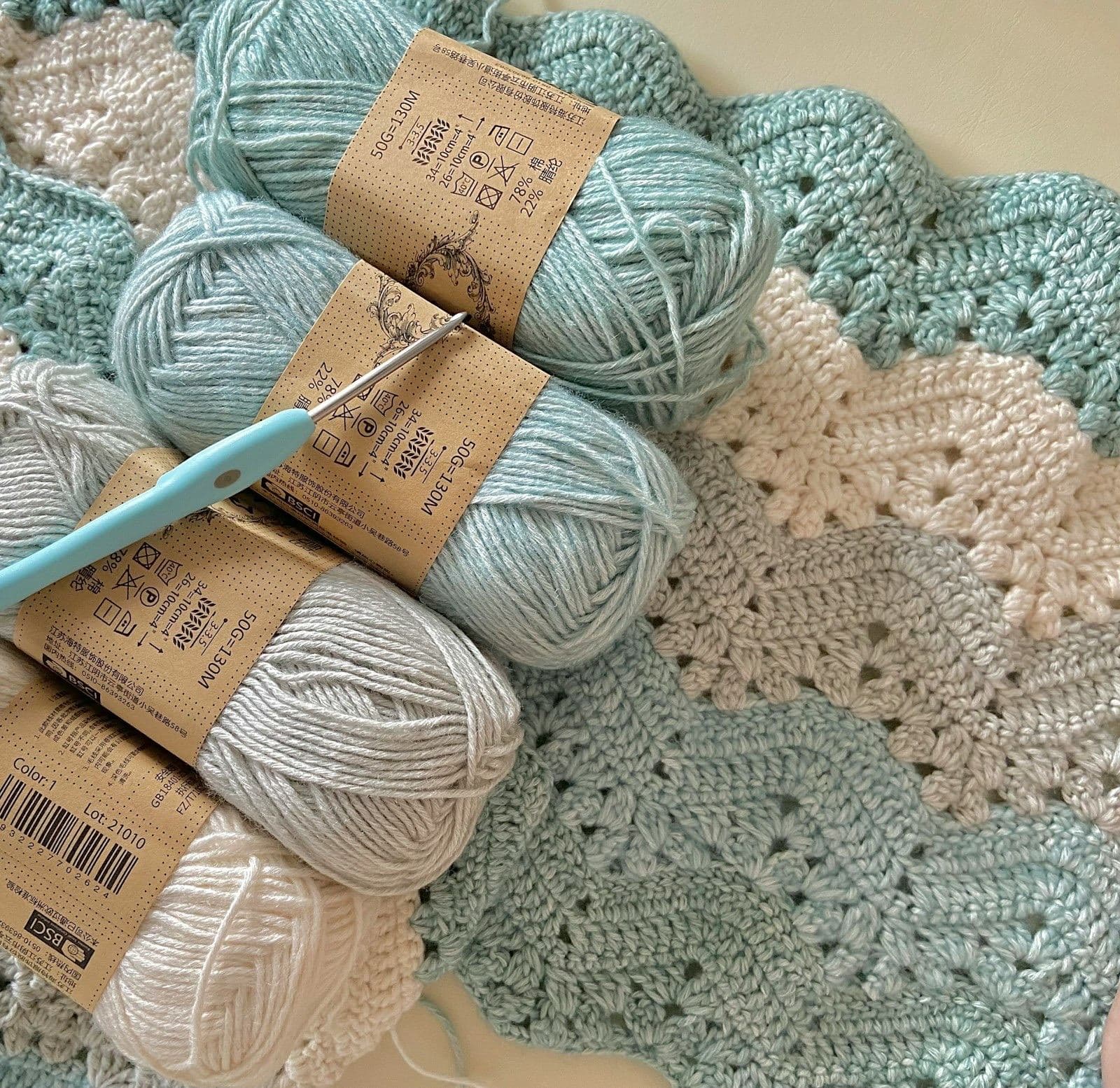
Reading a yarn label
- Weight symbol and recommended hook size
- Fiber content and care instructions
- Length in yards or meters, which helps you buy enough for a pattern
- Dye lot number: buy all the yarn for one project from the same dye lot, because colors can vary slightly between batches
Quick picks for common projects
| Project | Yarn | Hook |
|---|---|---|
| First practice swatch | Light-colored worsted acrylic | 5 mm (H-8) |
| Dishcloth or market bag | Worsted cotton | 4.5–5 mm |
| Amigurumi | Worsted cotton or acrylic | 3.5–4 mm |
| Cozy blanket | Worsted or bulky acrylic | 5.5–9 mm |
Ready to put your supplies to use? Start with our slip knot and foundation chain tutorial.
Looking for your next step?
More in Beginner Crochet