Crochet for Beginners: Essential Supplies and First Steps
Everything you actually need to start crocheting, plus a simple practice plan that takes you from your first slip knot to a finished swatch.
- Published
- Reading time
- 8 min read
- Skill level:
- Beginner
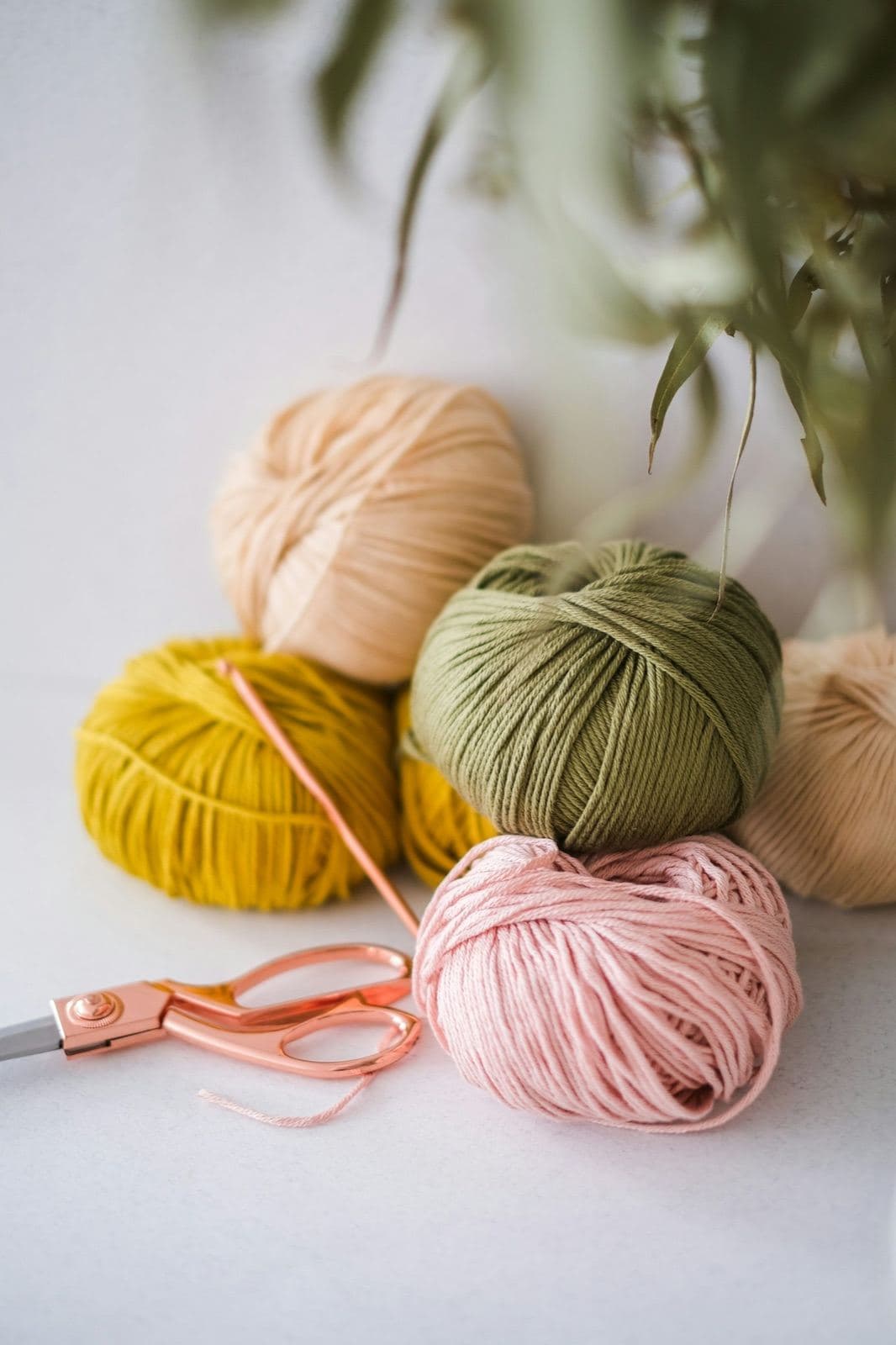
Inspiration photo by Raelle Cameron on Unsplash
In this article (6 sections)
Crochet has a reputation for being tricky to start, but the toolkit is small and the core motion is the same for every stitch: wrap the yarn, pull it through a loop. This guide covers the supplies worth buying, the ones you can skip, and a practice plan for your first few sessions.
The essential supply list
You can start with five inexpensive items. Resist buying a large kit until you know which projects you enjoy.
- One crochet hook, 5 mm (US H-8). This mid-range size suits medium-weight yarn and is comfortable for most hands. An ergonomic handle helps if your hand tires quickly.
- One skein of smooth, light-colored medium (worsted, weight 4) yarn. Light colors make each stitch easy to see. Acrylic is affordable and forgiving; cotton shows stitches clearly but has less stretch.
- Small scissors for trimming ends.
- A tapestry needle (a blunt needle with a large eye) for weaving in yarn tails.
- A few stitch markers. Locking markers or even a safety pin will do. They mark the first stitch of a row or round so you can count accurately.
Holding the hook and yarn
There is no single correct grip. Most crocheters use either a pencil grip (holding the hook like a pen) or a knife grip (hand over the top of the hook). Try both for a few minutes and keep whichever feels relaxed.
Your other hand controls the yarn. Drape the working yarn (the strand connected to the ball) over your index finger and loosely wrap it around your pinky or weave it between your fingers. This gives you tension, the steady resistance that keeps stitches even. Tension improves with practice, so don't worry if it feels awkward at first.
Your first three stitches
- Slip knot: the adjustable loop that attaches yarn to your hook. See our slip knot and foundation chain tutorial.
- Chain (ch): yarn over and pull through the loop on your hook. A row of chains is the foundation for most flat projects.
- Single crochet (sc): insert the hook into a stitch, yarn over, pull up a loop (two loops on hook), yarn over, and pull through both loops.
A simple practice plan
Short, regular sessions build muscle memory faster than one long session. Try this progression over a week:
- Make several chains of 20 until they look roughly even. Pull them out and start again; that is normal.
- Chain 16. Single crochet into the 2nd chain from the hook and in each chain across (15 sc).
- Chain 1 and turn. Single crochet in each stitch across. Count your stitches at the end of every row. You should always have 15.
- Repeat until the piece is roughly square. Congratulations: that is your first swatch, and it works as a coaster or a dishcloth if you used cotton.
Reading basic pattern abbreviations
| Abbreviation | Meaning |
|---|---|
| ch | chain |
| sl st | slip stitch |
| sc | single crochet |
| hdc | half double crochet |
| dc | double crochet |
| st(s) | stitch(es) |
| yo | yarn over |
| rep | repeat |
Fixing common beginner problems
- Edges slanting inward or outward: you are skipping or adding a stitch at the start or end of rows. Place a marker in the first and last stitch of each row.
- Foundation chain too tight to work into: make the chain with a hook one size larger, then switch back.
- Hand or wrist strain: loosen your grip, take breaks every 20 to 30 minutes, and try an ergonomic hook.
When your swatch feels comfortable, try the easy five-petal flower. It's a quick project that introduces working in the round.
Looking for your next step?
More in Beginner Crochet